One of the most expensive illusions in iGaming marketing is the belief that you can enter any market with a trendy idea and instantly capture attention and loyalty. In reality, content only works when it delivers real value to a specific audience. In multi-GEO projects, the real advantage belongs to those who understand their users better than anyone else. In the new edition of Expert Talks, we spoke with Yauheni Rehuzak, Media Content Lead at Already Media, about why market research is the foundation of a strong content strategy, how to work with local teams effectively, and which content trends will scale best in 2026.
Strategy adaptation
What are the biggest challenges your team faces when developing a multi-GEO strategy for iGaming projects?
In 2026, hype lasts days, sometimes hours. Users consume an overwhelming amount of content daily, which leads to what I call “trend blindness.” Whereas we used to plan content a month in advance, now we operate in real time.The biggest challenge is identifying a local trend – a meme, an event, or a cultural moment – before it becomes mainstream and loses its conversion power.
Another major factor is cultural fragmentation, or hyper-localization. Bright mascots and social proof messaging that work perfectly in LATAM may fall flat in Tier-1 European markets, where players prioritize game mechanics, transparency, and brand reliability. The tone of voice and visual language must feel native. Otherwise, the content looks like it was generated by an AI tool without any understanding of the local context.
How can you localize without compromising the brand concept?
Localization translates brand values into a language that the local audience understands. The concept breaks down when you try to fully adapt and lose the brand’s core identity. We work with brand pillars, which are usually three or four non-negotiable constants that remain consistent across all GEOs. These could be a visual style, a specific sense of humor, or a unique communication format. Everything else, such as background visuals, references, slang, and local trends, is adapted with local teams.
What ideas can truly scale globally and what must be adapted?
Some triggers are universal. The math behind a big win, strong visual effects, and the sound of coins dropping evoke the same emotions in Tokyo and Lima. Social proof also works globally: streaming, leaderboards, and notifications that “someone just won big.” Players want to feel like they’re part of something. However, storytelling must be local. Humor, memes, and pop culture references rarely transfer directly. For example, a joke from a British sitcom won’t automatically resonate in Argentina. This type of content should be created locally from scratch.
Risk perception also differs. In some cultures, gaming is seen as a life-changing opportunity. In others, it’s simply a way to relax after work. These differences directly impact tone, messaging, and CTA style.
Creativity as a process
Where do you usually start when entering a new market – with cultural characteristics, visual language, or audience behavior?
Focusing only on visuals can result in beautiful content that is meaningless. Focusing only on culture could result in lost conversions, so it’s important to consider other factors as well. We combine technical and cultural analysis.
- Audience behavior. Where do they spend time –TikTok, Telegram, Instagram, local super apps like WeChat, or email? Are they mobile-first or desktop users? In parts of Africa and Asia, desktop usage is minimal. This affects video length, button size, graphic complexity, and editing pace.
- Cultural context. Once we understand consumption mechanics, we add meaning. We analyze attitudes toward luck, taboos, behavioral triggers, gestures, and religious nuances. Even minor cultural missteps can damage brand trust.
What brings better results: live audience interaction or industry trend reports?
In 2026, I would say that trend reports are like a map with a route, and live communication is like a compass that sets the direction. Without both, you’re walking blindly. In my experience, live conversations and in-depth interviews have the strongest practical impact. They provide direct access to a region’s cultural code, unique slang, and real-time microtrends, such as how people communicate in private chats, the expressions they use in different situations, and the memes currently dominating local TikTok.
It’s essential to understand real player motivations. Trend reports often include generalized phrases like “high interest in high-volatility slots.” But only in a live conversation can you hear the personal reason behind that choice. For example: “I play this game because the character reminds me of a hero from my favorite childhood TV series.” Details like that can serve as powerful creative inspiration. We use a comprehensive analysis funnel, ranging from data-driven trend reports and AI-powered social trend monitoring to in-depth CustDev immersion in real-time audience engagement. This approach enables us to transform general statistics into unique ideas.
Why is it impossible to create strong content today without local teams and experts?
By 2026, the gap between global marketing and local players has become critical. In the past, a campaign could be carried by strong visuals alone. Today, content is primarily about context. Even if you speak the correct language, without a local team, you may still sound unconvincing.
Local experts solve several key challenges:
- Help decode cultural nuances – iGaming audiences are highly sensitive to anything that feels artificial;
- Ensure fast reaction times in a real-time marketing environment;
- Dig deeper into player pain points, motivations, and behavioral triggers.
Today, success doesn’t belong to the brand with the biggest budget. It belongs to the brand that feels native – one that speaks the player’s language, understands their context, and shows up in their world.
Once the strongest versions are identified, we proceed to large-scale video production. Using tools like Runway, we transform base concepts into visual content ready for publication, carefully adapting it to the specifics of each local market.
You use storytelling a lot in your projects. How do you find stories that truly resonate in different countries?
For me, storytelling isn’t just theory from textbooks. My approach is shaped by my background. I used to be a vocalist in a band, and I later performed in physical theater. These creative experiences help me step into the role of the user and create narratives that break through banner blindness. In both music and theater, you’re constantly searching for what makes the audience empathize. I applied that principle to iGaming. Having an interesting idea is not enough. You must find the emotional frequency that resonates with players in a specific region. Only genuine emotion creates real engagement.
What does the content creation process look like?
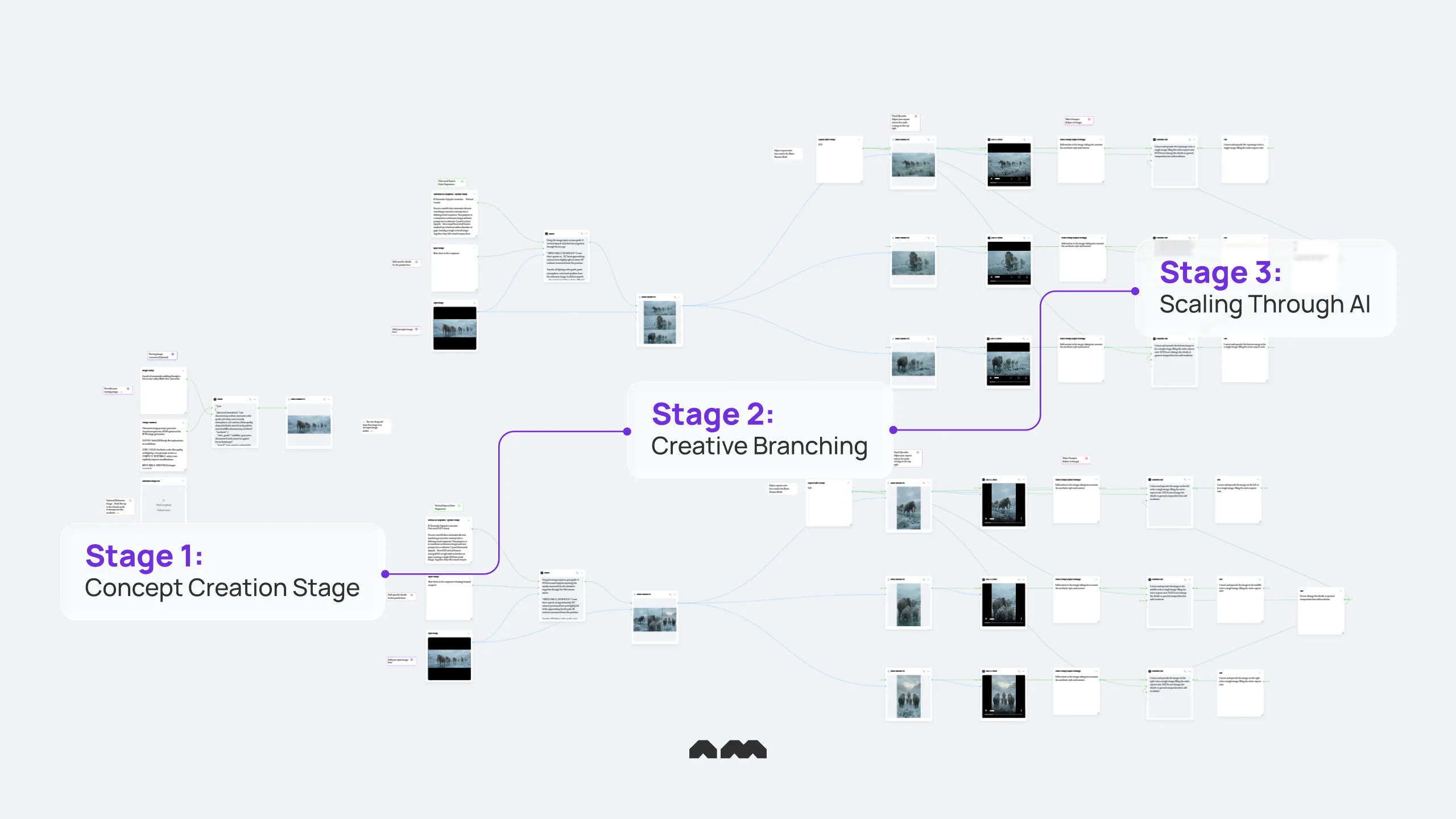
To scale quickly across multiple markets, we use a structured content creation and testing funnel that covers every stage, from developing a global concept to producing video content tailored to each GEO. It all starts with a strong concept. First, we define the core message, analyze trend reports, and build a strategic foundation around ideas with real value. Then, the process branches into parallel creative streams where the concepts are adapted to local cultural codes and transformed into region-specific scenarios and sketches. This enables us to test different emotional triggers before committing to full production.
Once the strongest versions are identified, we proceed to large-scale video production. Using tools like Runway, we transform base concepts into visual content ready for publication, carefully adapting it to the specifics of each local market.
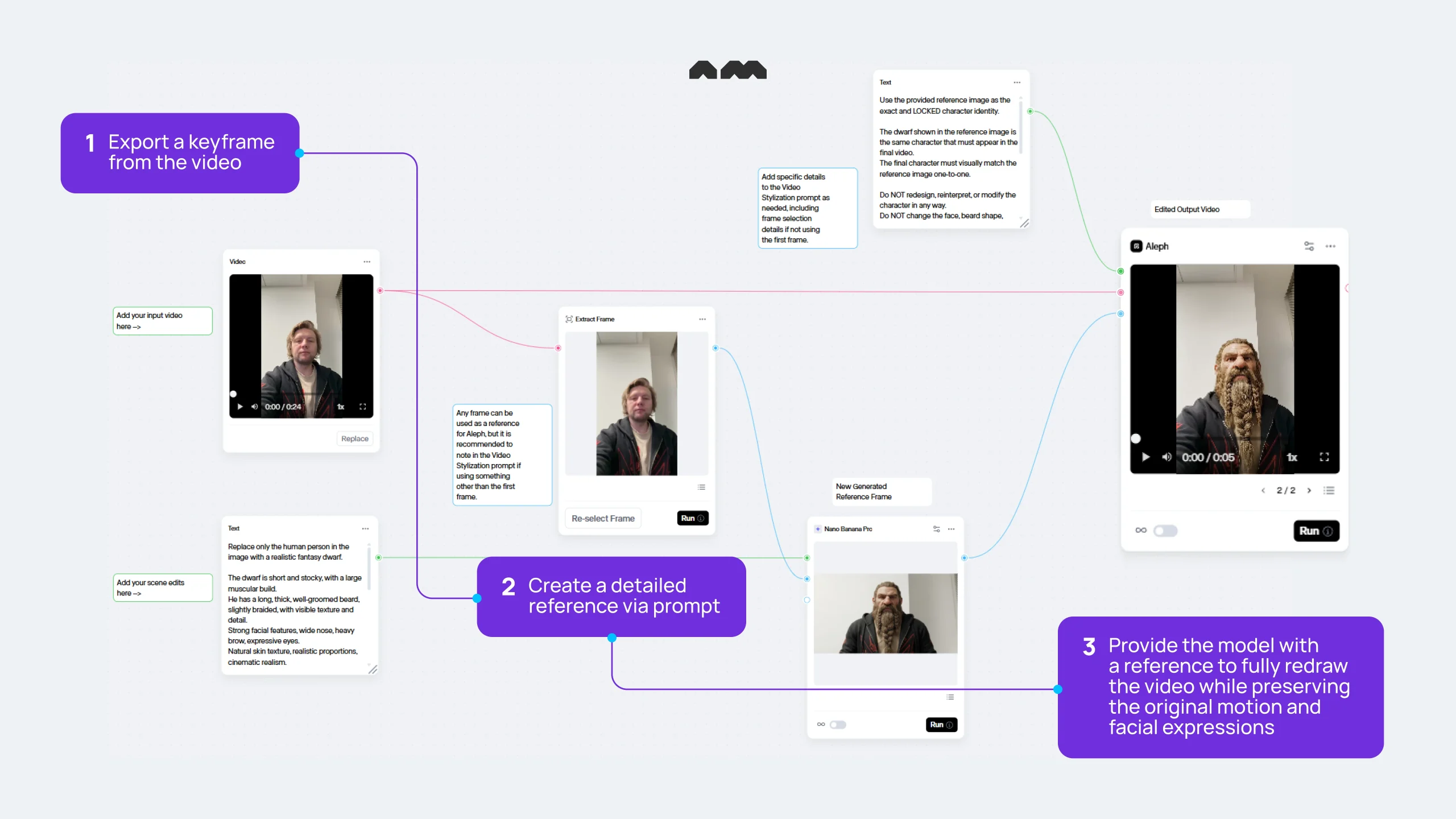
Video stylization is also fully managed. With AI, we transfer the appearance of a generated character onto a real person while preserving their original movements and facial expressions. First, we extract a key frame from the source video and refine it into a detailed visual reference based on a text prompt. For example, we can turn a character into a fantasy dwarf. Then, the AI redraws the entire video sequence using that reference while keeping the original motion and expressions intact.
This approach allows us to combine creative flexibility with production efficiency, delivering scalable, culturally relevant video content across markets.
Multi-GEO Trends 2026 in iGaming
What major trends define a strong multi-GEO strategy today?
Over the past few years, audiences have become far more demanding in terms of content quality, response time, and brand honesty. These changes have fundamentally reshaped the logic of multi-GEO strategy. In 2026, I would highlight three key directions.
- AI-Driven Localization. We moved beyond static websites long ago. Content now adapts dynamically to users in real time. For instance, if a Brazilian user logs in after an evening soccer match, an AI-integrated system can instantly update banners to suggest soccer-themed slots or quick bets for the next round. The system uses slang that just went viral on social media. As a result, the content feels alive and native.
- The Creator Economy. By 2026, traditional review sites will have lost effectiveness, and players will increasingly trust people over links. That’s why we’re building ecosystems around local creators, streamers, and experts. Instead of focusing on performance-based traffic, we invest in original content, such as podcasts, shows, educational formats, and live streams.
- Trust as a Feature. Markets are becoming more regulated, and players are paying more attention to safety, transparency, and communication standards. Trust is no longer an abstract value; it’s part of the product itself.
Which video formats scale best across regions?
By 2026, video will be more than just a format. It will be a powerful influence tool. However, not all videos perform equally well. Only videos aligned with the cultural and emotional context of the audience perform well. I rely on the following formats:
- Relatable Sketches. This is one of our favorites. We take a typical, everyday situation that is familiar to people in a specific region and present it through humor or a recognizable scenario. Users immediately recognize themselves and respond sincerely to the call to action.
- Authentic Creators. Players trust real people far more than polished advertising. Honest streams and lifestyle vlogs perform better when a local influencer shows not only gameplay, but also genuine emotions in a familiar home environment while speaking the audience’s language. This creates the effect of a friend or neighbor – someone who is easier to trust than obvious advertising.
- AI Video as Structured Production. By 2026, working with AI video will no longer be “one-click magic.” It’s a technological production pipeline. You become the director, operator, and graphics supervisor all at once. To produce high-conversion creative instead of random generative outputs, we build a structured workflow in each tool that controls the script, style, pacing, and final editing.
How can a content strategy be designed so that it doesn’t become outdated in a few months?
In an industry where trends disappear faster than Instagram Stories, a strategy based on specific visual tricks is doomed to fail. To keep a content plan relevant, think in terms of “how fast we adapt” rather than “what we publish.”
First, build a flexible architecture. Don’t create monolithic campaigns. Break content into modules. Instead of one expensive video, create a system with separate reactions, interchangeable backgrounds for different GEOs, and standalone game interfaces. This allows you to quickly rebuild formats for trends or markets without restarting production from scratch.
Second, invest in community development. Algorithms change. Ad accounts get blocked. However, a loyal audience core remains. That’s why you need two-way communication tools, such as Discord channels, private Telegram groups, and local forums. When the next trend disappears, you can still maintain direct contact with your audience. UGC content never becomes outdated because it reflects real life, not just marketing assumptions.
Third, stay human-centered. Tools like Runway or Midjourney are updated every few weeks. What feels cutting-edge today may look outdated tomorrow. That’s why it’s important to rely on emotional intelligence and storytelling, as well as technology. Real human emotion doesn’t age, and it’s what captures attention.
Conclusion
A strong multi-GEO strategy is built on balance, incorporating a global vision, local precision, and flexibility in technology choices. You can’t rely solely on trends, visuals, or automation. That’s why we systematically research markets, collaborate closely with local teams, and adapt content continuously to real audience needs. In this environment, sustainable brand growth isn’t based on short-term traffic spikes but on player trust, which is built step by step and sustained over time.